
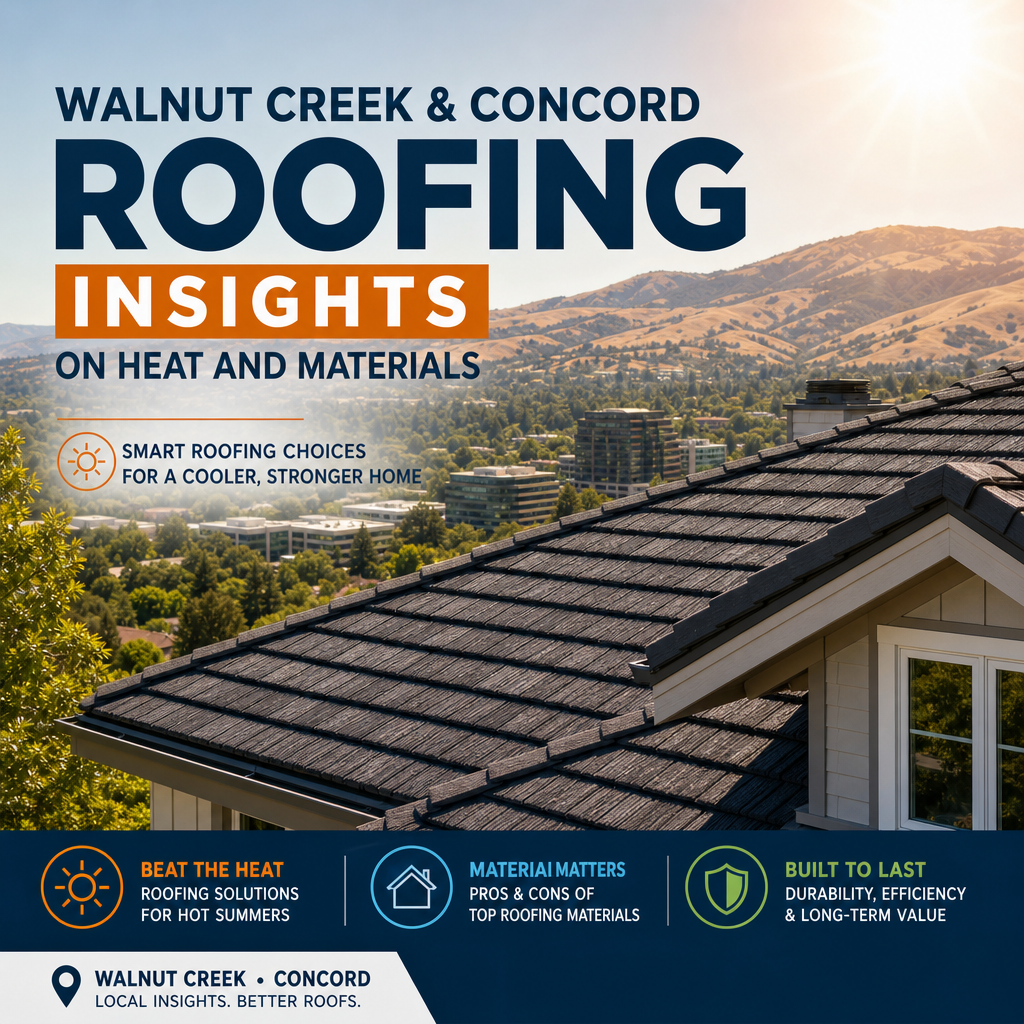
Walnut Creek and Concord Roofing Insights on Heat and Materials
Walnut Creek & Concord Roofing Insights: Heat, Expansion, and Material Choices
Roofing in Walnut Creek and Concord has to do more than keep out rain. It also has to handle long, hot summers, intense sun exposure, and the constant movement that comes with daily temperature swings. These East Bay conditions make Walnut Creek & Concord roofing a topic worth a closer look, especially when choosing materials that can stand up to heat and expansion over time.
A roof that performs well in a milder climate may age faster here. Understanding how heat affects roofing materials can help homeowners make smarter choices, reduce maintenance, and improve long-term comfort inside the home.
Why Heat Matters So Much in the East Bay
Walnut Creek and Concord experience plenty of sunny days, and roof surfaces can get much hotter than the air temperature. Dark shingles, metal panels, and tile all absorb and release heat differently, but every roof is affected by prolonged UV exposure.
That heat can cause several issues:
- Materials expand during the day and contract at night
- Fasteners and seams may loosen over time
- Protective coatings can break down faster
- Shingles may curl, crack, or lose granules
- Roof decking can experience added stress
These effects do not usually show up overnight. Instead, they build slowly, which is why local climate should always factor into roofing decisions.
Expansion and Contraction: The Hidden Roofing Stress
One of the biggest concerns in Walnut Creek & Concord roofing is thermal movement. Roof materials expand when heated and shrink when temperatures drop. This repeated motion can place stress on joints, flashing, and attachment points.
Common problem areas
Some parts of the roof are especially vulnerable:
- Flashing around chimneys and vents
- Seams in metal roofing
- Edges and ridges
- Areas where different materials meet
- Roof penetrations such as skylights or exhaust pipes
If expansion is not accounted for during installation, small gaps may form. Over time, those gaps can lead to leaks, warped materials, or premature wear.
Best Roofing Materials for Hot, Sunny Climates
Not every roofing material responds to heat in the same way. In Walnut Creek and Concord, material choice should balance durability, energy efficiency, and resistance to thermal movement.
Asphalt shingles
Asphalt shingles remain a popular choice because they are affordable and widely available. Modern versions perform better than older products, especially if they include reflective granules or enhanced UV resistance.
Pros:
- Lower upfront cost
- Easy to install and repair
- Available in many styles
Considerations:
- Can wear faster under extreme heat
- May require more frequent replacement in direct sun
- Quality varies significantly by product grade
Concrete and clay tile
Tile roofing is a strong fit for hotter climates. It handles sun exposure well and offers excellent durability when properly installed.
Pros:
- Strong resistance to heat and UV rays
- Long lifespan
- Good natural insulation properties
Considerations:
- Heavier than other materials
- Requires proper structural support
- Can crack if impacted or walked on carelessly
Metal roofing
Metal roofing is increasingly popular because it reflects heat well and can last a long time. It also performs well when expansion is properly managed during installation.
Pros:
- Excellent durability
- Highly reflective options available
- Lightweight compared to tile
Considerations:
- Can be noisy without proper underlayment
- Seams and fasteners must be installed carefully
- Thermal movement must be planned for
Ventilation and Underlayment Make a Big Difference
Material choice matters, but so does the system beneath the roof surface. Good ventilation helps reduce attic heat buildup, which lowers stress on roofing materials and can improve indoor comfort.
A well-designed roofing system in this region should include:
- Ridge and soffit ventilation
- Quality underlayment
- Proper flashing
- Heat-resistant sealants
- Adequate attic insulation
Together, these components help manage temperature changes and extend roof life. Even the best roofing material can fail early if the supporting system is weak.
Signs Your Roof May Be Struggling with Heat
Homeowners in Walnut Creek and Concord should keep an eye out for early signs of heat-related wear. Catching issues early can prevent larger repairs.
Watch for:
- Shingles that are curling or blistering
- Cracked or loose tiles
- Rusting or separating metal seams
- Gaps around flashing
- Interior heat buildup in the attic
- Granules collecting in gutters
These symptoms do not always mean a roof needs immediate replacement, but they do suggest it may be time for a professional inspection.
Choosing the Right Roof for Long-Term Performance
The best roofing choice depends on the home, budget, and exposure level. A shaded property may have different needs than a south-facing roof that bakes in the afternoon sun. Local building codes, roof pitch, and attic design also play important roles.
For many homeowners, the smartest approach is to think beyond appearance. A roof should be selected for:
- Heat resistance
- Movement tolerance
- Energy efficiency
- Maintenance needs
- Expected lifespan
That is especially true in Walnut Creek & Concord roofing, where climate conditions can shorten the life of a poorly matched system.
Final Thoughts
Heat and expansion are not just technical details. They are everyday realities that affect how roofs in Walnut Creek and Concord age, perform, and protect the home. The right material, installed with proper ventilation and flashing, can make a major difference in comfort and durability.
By choosing a roof designed for local conditions, homeowners can reduce stress on the structure, limit repair costs, and get more value from their investment. In a region where sun exposure is a constant factor, thoughtful roofing choices pay off year after year.