
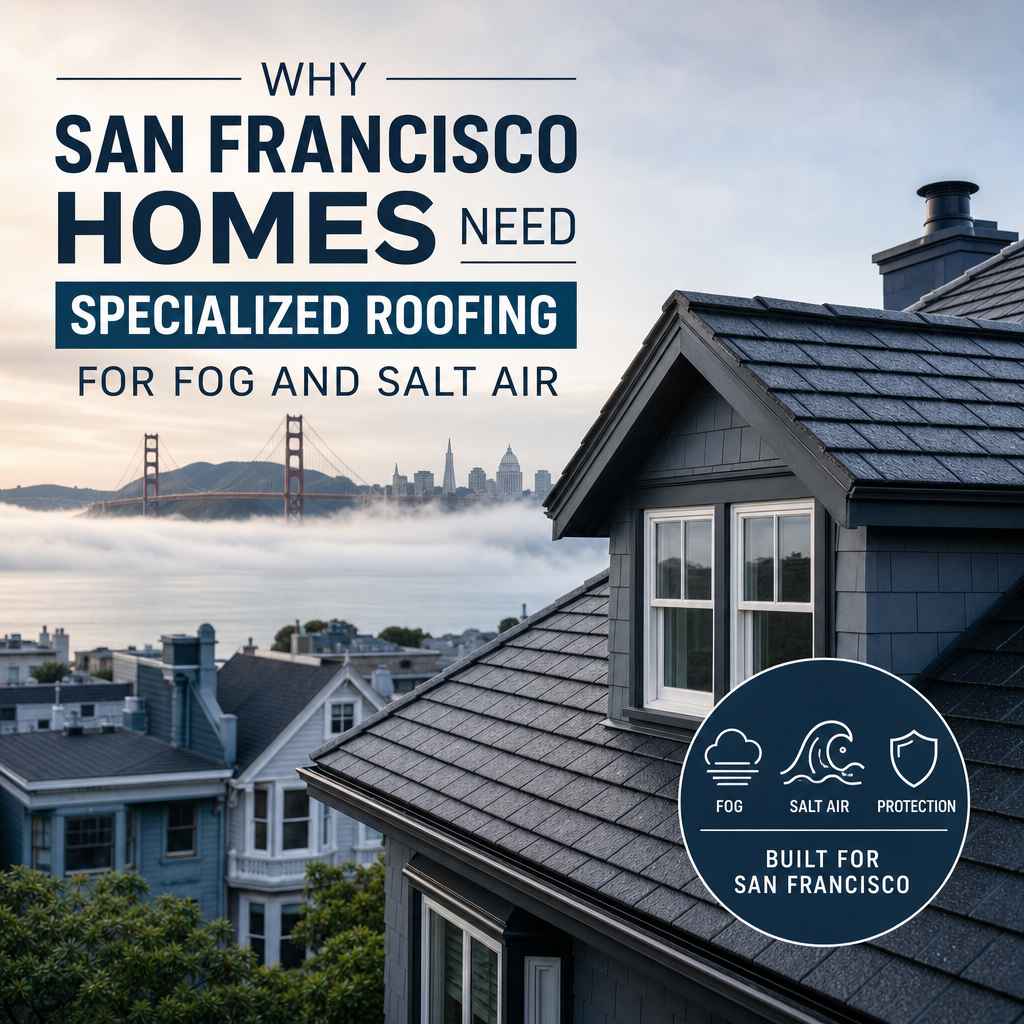
Why San Francisco Homes Need Specialized Roofing for Fog and Salt Air
Why San Francisco Homes Need Specialized Roofing Due to Fog and Salt Air
San Francisco’s beauty comes with a roofing challenge that homeowners often underestimate. Between dense coastal fog, cool temperatures, and salt-laden air, local roofs face constant exposure to conditions that can speed up wear and reduce performance. That is why specialized roofing for San Francisco homes is not just a luxury—it is a practical necessity.
A roof in this city must do more than keep out rain. It has to resist moisture that lingers for days, handle corrosion from ocean air, and stand up to frequent temperature shifts. The right roofing system can make a major difference in longevity, energy efficiency, and maintenance costs.
The Impact of Fog on Roofs
Fog is one of the most defining features of San Francisco weather. While it may seem harmless, fog brings prolonged moisture that settles on roofing materials early in the morning and often sticks around well into the day.
Constant Dampness Creates Problems
Unlike a heavy rainstorm that passes quickly, fog can leave roofs damp for long periods. That repeated exposure can lead to:
- Faster deterioration of roofing materials
- Mold and mildew growth
- Wood rot in underlayment and roof decking
- Increased risk of leaks over time
This is especially problematic for older homes, where roofing layers may already be vulnerable. Moisture that remains trapped beneath shingles or tiles can slowly weaken the roof structure from the inside out.
Reduced Drying Time
In many climates, sunlight dries roofs quickly after rain or condensation. In San Francisco, however, cool air and frequent cloud cover can keep materials wet longer. That means roofing products must be selected for their ability to dry efficiently and resist moisture absorption.
How Salt Air Damages Roofing Materials
San Francisco’s proximity to the Pacific Ocean means homes are regularly exposed to salt in the air. Even if a house is not directly on the waterfront, salt particles can travel inland and settle on roofs, flashing, gutters, and fasteners.
Corrosion Is a Serious Concern
Salt speeds up corrosion in metal components. This includes:
- Nails and screws
- Flashing
- Gutters and downspouts
- Chimney and vent coverings
- Metal roof panels
When these parts corrode, the entire roofing system can be compromised. A small failure in flashing or fastening may lead to water intrusion, structural damage, and costly repairs.
Salt Can Weaken Protective Coatings
Many roofing materials rely on protective finishes to extend their lifespan. Salt air can break down those coatings faster than expected, reducing resistance to rust, staining, and surface wear. Over time, this can make a roof look older and perform worse than one in a less coastal environment.
Best Roofing Choices for San Francisco Homes
Because of the city’s weather conditions, not every roofing material is equally suited for local homes. The best choice often depends on the home’s design, age, and location, but some materials perform better in foggy, salty conditions.
Metal Roofing with Coastal Protection
Metal roofs can be an excellent option when properly treated for coastal exposure. Look for:
- Corrosion-resistant coatings
- Stainless steel or aluminum components
- Durable flashing and fasteners designed for marine climates
A well-installed metal roof can offer strong protection and a long lifespan, especially when paired with regular inspections.
Clay and Concrete Tile
Tile roofs are common in San Francisco and can perform well in moist climates. They are naturally resistant to water and fire, making them a strong option for many homes. However, the underlayment beneath the tile must be high quality, since the tiles themselves are not the only layer protecting the home.
Slate Roofing
Slate is another durable choice, known for its longevity and resistance to weather. It can handle moisture well, though installation must be done correctly to prevent problems with the roof structure and fasteners.
Asphalt Shingles with Enhanced Weather Resistance
Modern architectural shingles with algae resistance and improved moisture protection can also work well, especially for homeowners seeking a more budget-friendly option. Still, they should be selected carefully for coastal durability and installed with proper ventilation.
Why Ventilation Matters More in Foggy Climates
Good ventilation is essential in any home, but it becomes even more important in fog-heavy areas. Without enough airflow, moisture can become trapped in the attic and roof assembly.
Poor Ventilation Leads to Hidden Damage
When trapped moisture cannot escape, it can contribute to:
- Wood rot
- Insulation damage
- Higher energy bills
- Shortened roof lifespan
A properly ventilated roof helps control temperature and moisture levels, protecting both the roofing materials and the interior of the home.
Regular Maintenance Is Essential
Even the best roofing system needs ongoing care in San Francisco’s coastal environment. Regular roof inspections can catch small issues before they become major repairs.
What Homeowners Should Watch For
Common signs of roof trouble include:
- Rust on metal parts
- Dark stains or moss growth
- Loose or cracked shingles
- Damaged flashing
- Water spots on ceilings or attic surfaces
Scheduling periodic inspections, especially after storms or during seasonal weather changes, can help extend the life of the roof.
Final Thoughts
San Francisco homes face a unique combination of fog, moisture, and salt air that can shorten the lifespan of standard roofing systems. Choosing the right materials, ensuring proper ventilation, and keeping up with maintenance are all part of protecting a home in this environment.
For homeowners, specialized roofing for San Francisco homes is one of the smartest investments they can make. It helps prevent corrosion, reduces moisture damage, and supports long-term comfort and durability in one of the country’s most distinctive coastal climates.