

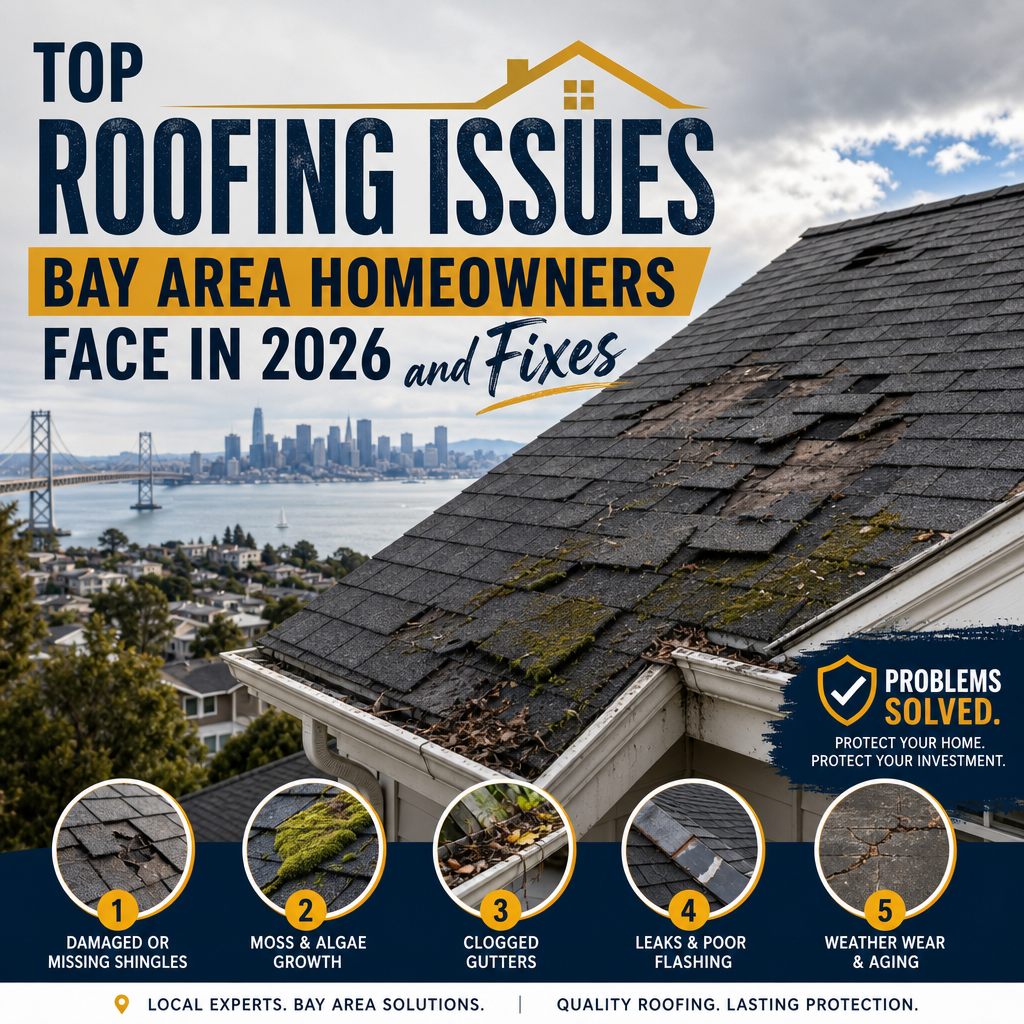
Top Roofing Issues Bay Area Homeowners Face in 2026 and Fixes
Top Roofing Issues Bay Area Homeowners Face in 2026 — And How to Fix Them
Bay Area roofs face a unique mix of challenges. From salty coastal air and winter rain to wildfire smoke, heat waves, and aging housing stock, local roofs take a beating year-round. In 2026, the biggest roofing problems Bay Area homeowners deal with are often a combination of weather, maintenance gaps, and materials that were never ideal for the region in the first place.
If you’re trying to protect your home, lower repair costs, and avoid surprise leaks, it helps to know what to watch for. Here are the top roofing issues Bay Area homeowners face in 2026 and the smartest ways to fix them.
1. Leaks from Heavy Winter Rains
The Bay Area may not get constant rain, but when storms hit, they can hit hard. Sudden downpours expose weak spots in flashing, underlayment, and aging shingles or tiles.
Common warning signs
- Water stains on ceilings
- Damp attic insulation
- Dripping near skylights or chimneys
- Moldy smells after storms
How to fix it
A professional inspection can locate the source before the damage spreads. In many cases, the solution is straightforward:
- Replace damaged flashing
- Seal roof penetrations
- Repair cracked tiles or lifted shingles
- Upgrade underlayment in vulnerable areas
The key is to address small leaks early. A tiny opening can turn into a major repair if repeated rains keep soaking the same area.
2. Sun and Heat Damage
Many homeowners think of roof damage as a winter problem, but Bay Area summers can be rough on roofing materials. Intense UV exposure, heat spikes, and dry conditions can cause materials to age faster.
Common warning signs
- Brittle or curling shingles
- Faded roofing materials
- Cracked sealant around vents
- Higher indoor temperatures
How to fix it
Reflective or cool roofing materials can help reduce heat absorption. If your roof is older, consider:
- Replacing worn shingles with heat-resistant options
- Installing proper attic ventilation
- Checking insulation to reduce heat transfer
- Recoating flat roof surfaces where appropriate
Better ventilation is especially important. Without it, trapped heat shortens roof life and drives up energy costs.
3. Moss, Algae, and Moisture Buildup
Shaded neighborhoods, coastal fog, and cooler microclimates create the perfect environment for moss and algae growth. While it may start as a cosmetic issue, moss can trap moisture and lift roofing materials over time.
Common warning signs
- Green or black streaks
- Soft spots on shingles
- Moss growth along edges or valleys
- Slippery roof surfaces
How to fix it
The solution is usually a combination of cleaning and prevention:
- Remove moss safely with a professional roof cleaning
- Trim overhanging branches to improve sunlight and airflow
- Install zinc or copper strips where appropriate
- Keep gutters clear so moisture doesn’t linger
Avoid pressure washing, which can damage shingles and shorten roof life.
4. Wind Damage and Loose Roofing Materials
Strong coastal winds and seasonal storms can loosen shingles, lift flashing, and shift roof tiles. This is especially common on older roofs or roofs with poor installation.
Common warning signs
- Missing shingles or tiles
- Debris in the yard after windstorms
- Loud flapping sounds during high winds
- Exposed roof layers
How to fix it
After a wind event, inspect the roof quickly or schedule a professional checkup. Repairs may include:
- Replacing missing materials
- Re-securing loose flashing
- Fastening roof edges and ridge caps
- Upgrading to wind-rated materials during replacement
If the damage is recurring, it may be time to evaluate whether the roof structure or installation needs a more complete update.
5. Aging Roofs on Older Bay Area Homes
A lot of Bay Area homes still have roofing systems that are 20, 30, or even 40 years old. In 2026, aging roofs are one of the most common reasons for recurring repairs and energy inefficiency.
Common warning signs
- Frequent patch jobs
- Sagging sections
- Granules in gutters
- Recurring leaks in the same spots
How to fix it
At a certain point, repairs stop being cost-effective. A roof replacement may be the better investment if:
- The roof is nearing the end of its expected lifespan
- Repairs are becoming more frequent
- Structural issues are beginning to show
- The roof no longer meets current energy or fire-safety standards
A modern replacement can improve durability, efficiency, and long-term value.
6. Fire Risk and Ember Exposure
Wildfire seasons continue to influence roofing decisions across the Bay Area. Even homes far from active fires can face ember exposure, which makes roofing material choice more important than ever.
Common warning signs
- Open gaps around roof edges
- Dry debris in roof valleys or gutters
- Older wood shake roofing
- Vents without ember protection
How to fix it
Fire-conscious roofing upgrades can make a major difference:
- Use Class A fire-rated materials where possible
- Install ember-resistant vents
- Keep gutters and roof surfaces free of dry debris
- Replace outdated wood shake with safer alternatives
These improvements don’t just add protection. They can also make your home more appealing to insurance providers and future buyers.
7. Poor Drainage and Clogged Gutters
Water management matters just as much as the roof itself. When gutters clog or drains back up, water can pool near the roofline and seep into the home.
Common warning signs
- Overflowing gutters
- Water stains near fascia boards
- Pooling on flat roofs
- Rotting trim or siding
How to fix it
Routine maintenance goes a long way:
- Clean gutters at least twice a year
- Check downspouts for blockages
- Make sure roof slopes drain properly
- Repair sagging gutters or damaged drainage components
For flat roofs, proper drain placement and regular clearing are essential to prevent standing water.
Keep Your Roof Ready for 2026
The best way to handle roofing issues Bay Area homeowners face in 2026 is to stay proactive. Small problems are easier and cheaper to fix than emergency leaks or full replacements.
A yearly inspection, regular gutter cleaning, and prompt repairs can extend the life of your roof and protect your home from the region’s changing weather patterns. If your roof is showing signs of age, now is the time to plan ahead before the next storm, heat wave, or fire season puts it to the test.