
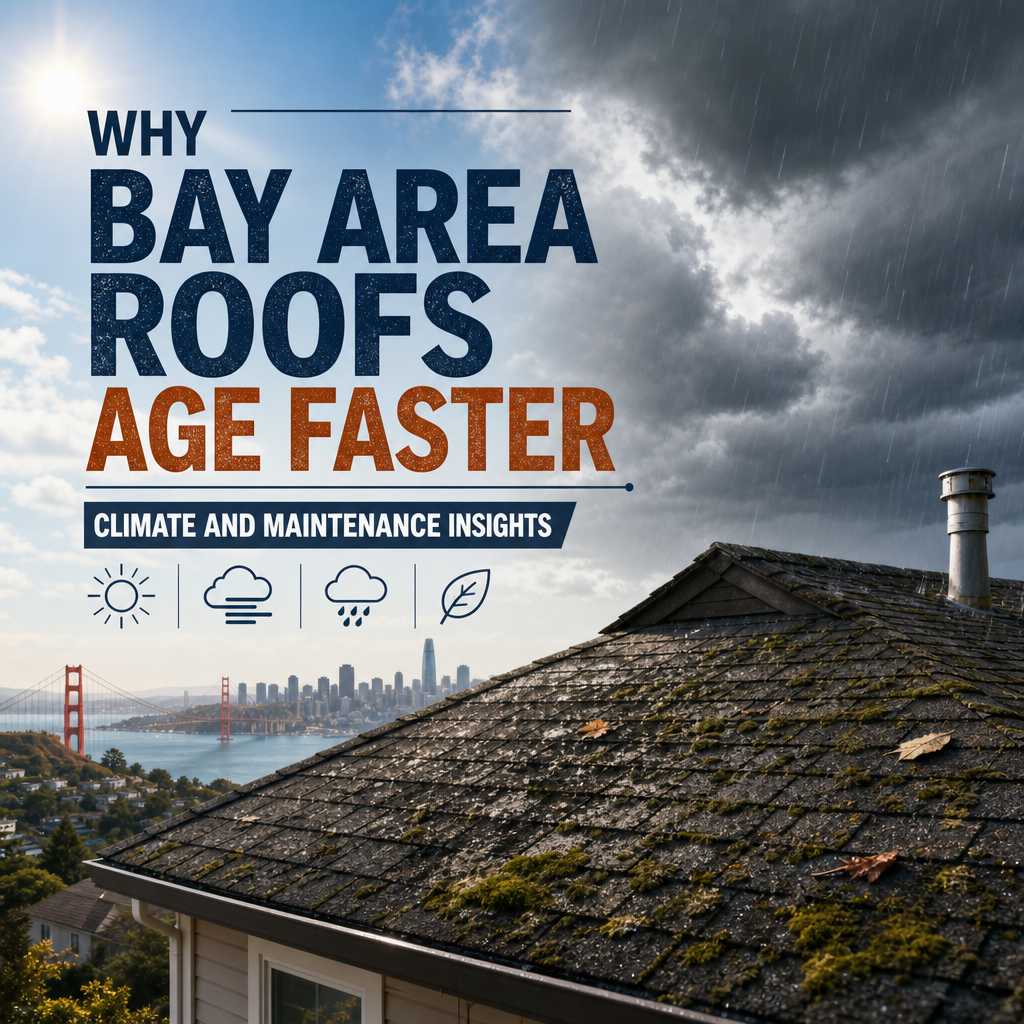
Why Bay Area Roofs Age Faster: Climate and Maintenance Insights
Why Bay Area Roofs Age Faster: Climate, Micro-Weather, and Maintenance Insights
The Bay Area roof faces a unique set of conditions that can make it age faster than roofs in many other regions. From salty coastal air to fog, strong sun, and sudden temperature swings, local weather patterns work together to wear down shingles, flashing, sealants, and underlayment over time. Even homes just a few miles apart can experience very different roof stress.
Understanding what speeds up roof aging in the Bay Area can help homeowners spot problems earlier and plan better maintenance. A roof that looks fine from the ground may already be dealing with hidden moisture, UV damage, or wind-related wear.
The Bay Area Climate Is Tougher Than It Looks
At first glance, the Bay Area may seem mild compared with places that get heavy snow or constant storms. But “mild” does not mean “easy on roofs.” In fact, the region’s combination of weather patterns can be especially hard on roofing materials.
Fog and Moisture
Morning fog is common in many parts of the Bay Area, especially near the coast and in hillsides. That means roofs often stay damp longer than homeowners realize. Repeated exposure to moisture can:
- Encourage moss and algae growth
- Break down sealants and adhesives
- Increase the risk of wood rot
- Shorten the life of underlayment and decking
When a roof dries slowly day after day, small weaknesses can turn into bigger issues.
Salt Air Near the Coast
Homes closer to the ocean are exposed to salt carried in the air. Salt can corrode metal components like flashing, nails, vents, and gutters. Over time, that corrosion can weaken the roof system and make leaks more likely.
Even if a roof covering itself holds up well, the supporting hardware may deteriorate sooner in coastal microclimates.
Strong UV Exposure
The Bay Area gets plenty of sun, especially in inland neighborhoods. UV rays can dry out roofing materials, causing them to become brittle and crack. Asphalt shingles may lose protective granules, while sealants can shrink and fail.
A roof that bakes under intense afternoon sun may age faster than one exposed to cooler conditions.
Micro-Weather Makes a Big Difference
One of the biggest reasons a Bay Area roof ages unevenly is micro-weather. The region is known for dramatic local climate shifts over short distances. A roof in San Francisco may face wind and fog, while a roof in Walnut Creek or San Jose may deal with hotter temperatures and stronger sun.
Hills, Valleys, and Wind Exposure
Topography matters. Roofs on ridges, hillsides, and open lots often take more wind than homes sheltered by trees or nearby buildings. Wind can:
- Lift shingles or tiles
- Loosen flashing
- Force rain into small openings
- Carry debris that scratches roofing surfaces
Repeated wind exposure may not cause dramatic damage all at once, but it slowly weakens the roof system.
Temperature Swings
The Bay Area can experience cool mornings and warm afternoons, especially inland. That constant expansion and contraction stresses roofing materials and fasteners. Over time, this movement can cause seams to separate and tiny cracks to form.
This is one reason roofs can age faster here than homeowners expect: the wear is gradual, repetitive, and easy to miss.
Maintenance Gaps Accelerate Roof Aging
Local weather is only part of the story. A roof also ages faster when maintenance is delayed. Minor issues that could be inexpensive to fix often become costly repairs when ignored.
Common Maintenance Problems
Some of the most common roof issues in the Bay Area include:
- Clogged gutters that trap water
- Moss or debris buildup
- Cracked flashing around chimneys and vents
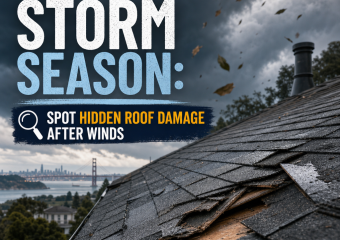
- Loose shingles or tiles after windy conditions
- Blocked roof drainage on low-slope roofs
- Small leaks that go unnoticed during foggy weather
Because moisture can linger, even a small opening may allow water to enter repeatedly before anyone notices the damage.
Why Routine Inspections Matter
Regular inspections are especially important in this region. A roof should be checked after major wind events, before the rainy season, and whenever there are signs of staining, missing materials, or interior ceiling changes.
A professional inspection can catch hidden problems such as:
- Soft spots in the decking
- Deteriorated sealant
- Rusted fasteners
- Early signs of wood rot
- Damage under lifted shingles or tiles
Signs Your Roof May Be Aging Too Fast
If you own a home in the Bay Area, it helps to watch for early warning signs. These clues often show up before major damage develops.
Look for These Red Flags
- Shingles curling, cracking, or losing granules
- Moss, algae, or dark streaks
- Rust on metal roof parts
- Water stains in the attic or on ceilings
- Sagging roof sections
- Broken or slipped tiles
- Gutters filled with debris or roofing material
If several of these signs appear at once, the roof may be under more stress than expected.
How to Extend the Life of a Bay Area Roof
While local conditions are tough, good maintenance can make a big difference. Homeowners can help slow roof aging by staying proactive.
Practical Tips
- Clean gutters and roof drains regularly
- Trim back overhanging trees
- Schedule inspections at least once a year
- Repair flashing and sealant issues quickly
- Remove moss and debris safely
- Improve attic ventilation to reduce heat and moisture buildup
- Use materials suited to the local climate when replacing roof sections
The right care won’t stop weathering, but it can delay major deterioration and protect your home.
Final Thoughts
A Bay Area roof ages faster because it is constantly challenged by fog, salt air, sun, wind, and micro-weather differences from one neighborhood to the next. Add in delayed maintenance, and small problems can turn into serious roof damage sooner than many homeowners expect.
The good news is that early inspections and routine upkeep go a long way. By understanding how local climate affects your roof, you can make smarter decisions, catch issues early, and extend the life of your home’s first line of defense.