
Earthquake-Ready Roofing for Bay Area Homes Structural Safety
Earthquake‑Ready Roofing: How Bay Area Homes Can Strengthen Structural Safety
Living in the Bay Area means preparing for more than just storms and wildfires. It also means planning for seismic activity. While many homeowners focus on foundations and walls, the roof is a critical part of a home’s structural system. A weak roof connection can increase the risk of damage during an earthquake, leading to costly repairs and safety hazards.
Earthquake-ready roofing is about more than choosing durable materials. It involves strengthening the way the roof is attached, supported, and maintained so it can better withstand sudden ground movement. For Bay Area homes, this kind of preparation can make a major difference in both safety and long-term resilience.
Why Roof Strength Matters in an Earthquake
During an earthquake, a house experiences rapid side-to-side and vertical motion. If the roof is not properly secured, that movement can cause shifting, cracking, or even partial collapse. Roof damage can also compromise the rest of the structure, including walls, ceilings, and support beams.
A well-designed roof system helps:
- Keep the structure tied together
- Reduce the chance of separation between roof and walls
- Limit interior damage from falling debris
- Improve the home’s overall seismic performance
In older Bay Area homes, roof systems may not meet current seismic standards. That makes inspection and reinforcement especially important.
Start with a Roof Inspection
The first step in creating earthquake-ready roofing is a professional inspection. A licensed roofer or structural specialist can identify weak points before they become major issues.
Look for signs such as:
- Loose or missing fasteners
- Cracked rafters or trusses
- Deteriorated roof sheathing
- Water damage around joints and edges
- Outdated attachment methods
An inspection can also reveal whether the roof is properly connected to the walls and framing below. In earthquake zones, these connections matter just as much as the roofing material itself.
Strengthen the Roof-to-Wall Connection
One of the most important upgrades for seismic safety is improving the connection between the roof and the rest of the house. Earthquake motion can push a roof off its supporting walls if the attachment is weak.
Common reinforcement methods include:
Installing Hurricane Clips or Seismic Straps
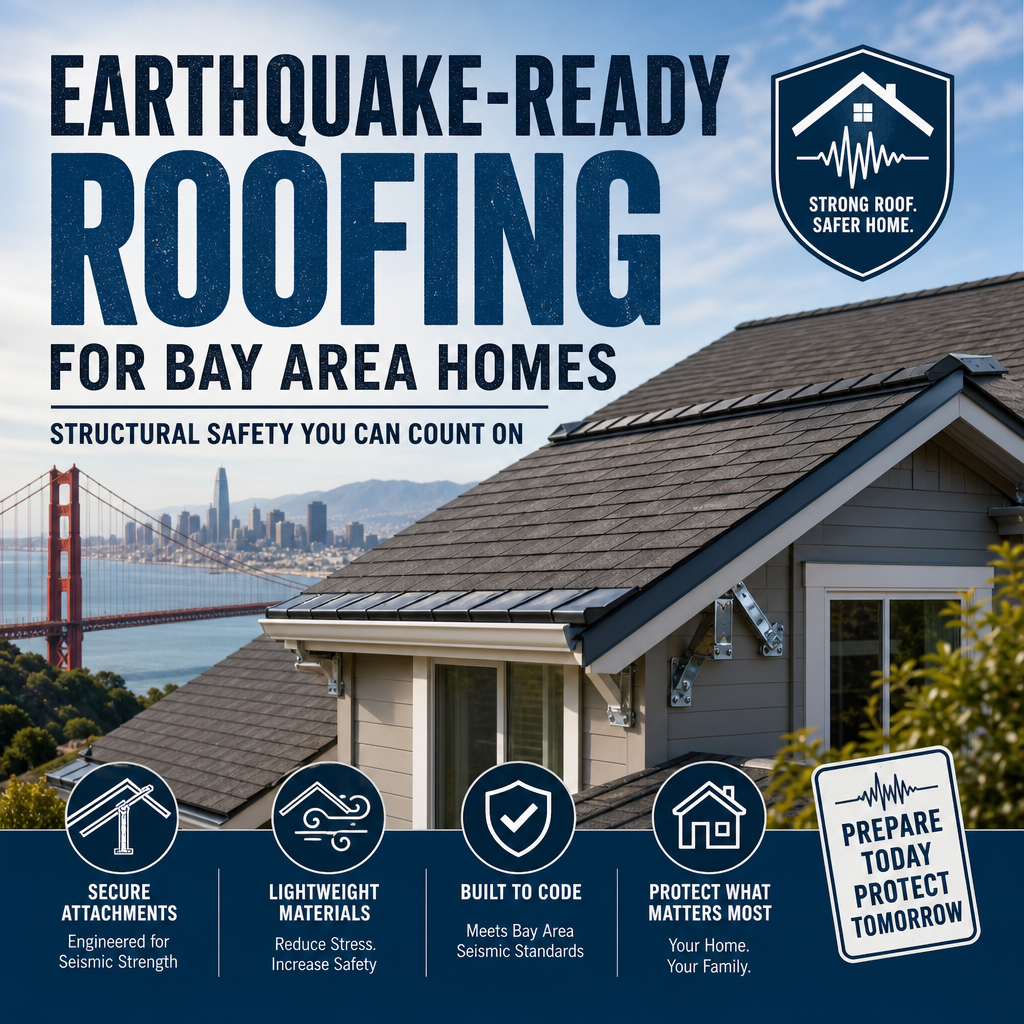
These metal connectors help anchor the roof framing to the wall framing. They add stability and reduce the chance of roof uplift or lateral movement during shaking.
Upgrading Fasteners
Modern screws, nails, and connectors are often stronger and more reliable than older construction methods. In some homes, replacing outdated hardware can significantly improve performance.
Securing the Roof Sheathing
Roof sheathing should be tightly fastened to the framing members. Strong sheathing helps distribute seismic forces more evenly across the roof surface.
Choose Lightweight Roofing Materials
Heavier roofs can place more stress on a home during seismic activity. In general, lighter materials are better for earthquake resilience because they reduce the force acting on the structure.
Popular lightweight roofing options include:
- Asphalt shingles
- Metal roofing
- Certain composite materials
Clay or concrete tiles may be beautiful and durable, but they are heavier and can create more danger if they break loose. If a Bay Area homeowner prefers tile, it is especially important to ensure the roof structure is reinforced and the tiles are properly secured.
Reinforce Vulnerable Roof Features
Not every part of a roof responds to shaking in the same way. Features like chimneys, skylights, vents, and roof edges often need extra attention.
Chimneys
Brick chimneys are especially vulnerable in earthquakes. They may need bracing or retrofitting to reduce collapse risk.
Skylights and Roof Openings
Large roof penetrations can weaken structural integrity if they are not framed correctly. Proper installation helps protect these areas from shifting or cracking.
Eaves and Roof Edges
The edges of the roof should be firmly fastened and sealed. Weak eaves can separate during seismic movement, exposing the home to weather damage after the quake.
Maintain the Roof Regularly
Even a strong roof can become vulnerable if it is poorly maintained. Regular upkeep is a simple but effective way to preserve earthquake readiness.
Good maintenance habits include:
- Checking for loose shingles or tiles
- Inspecting flashing around chimneys and vents
- Clearing debris from gutters and roof valleys
- Repairing leaks promptly
- Watching for signs of rot or rust
In the Bay Area, where moisture and sun exposure can both affect roofing materials, routine maintenance helps preserve structural strength over time.
Consider a Full Seismic Retrofit
In some cases, roof reinforcement should be part of a broader seismic retrofit. A full retrofit may include:
- Bolting the house to the foundation
- Bracing cripple walls
- Reinforcing framing connections
- Securing the roof structure
This approach is especially valuable for older homes that were built before modern earthquake standards were adopted. When roof improvements are combined with foundation and framing upgrades, the entire home becomes more resilient.
A Safer Roof Starts with Preparation
Earthquake-ready roofing is an investment in safety, stability, and peace of mind. For Bay Area homeowners, it offers a practical way to reduce damage and protect the home from one of the region’s most serious natural threats.
By inspecting the roof, strengthening connections, choosing lighter materials, and maintaining the system regularly, homeowners can improve structural safety in a meaningful way. In an earthquake-prone area, that preparation is not optional—it is essential.