

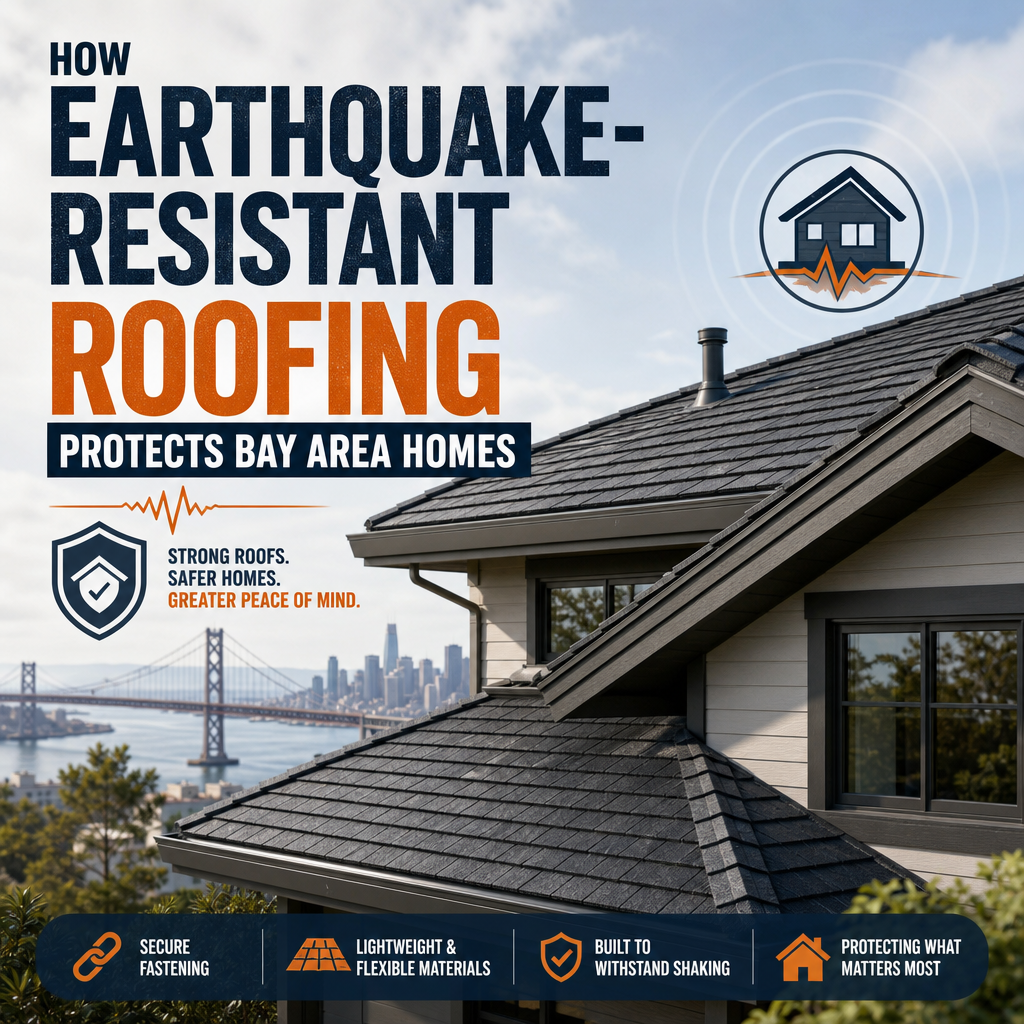
How Earthquake-Resistant Roofing Protects Bay Area Homes
How Earthquake-Resistant Roofing Protects Bay Area Homes
Living in the Bay Area means enjoying beautiful weather, coastal views, and vibrant neighborhoods—but it also means preparing for seismic activity. Homeowners often think about foundation bolts, framing upgrades, and securing heavy furniture, but one of the most important parts of a home is sometimes overlooked: the roof. Earthquake-resistant roofing plays a major role in protecting Bay Area homes from damage when the ground shakes.
A roof is more than a covering. It is part of the structural system that helps a house stay stable during an earthquake. When installed and reinforced correctly, it can reduce the risk of collapse, protect the interior from water damage, and improve overall safety for everyone inside.
Why Roofing Matters During an Earthquake
During an earthquake, a home moves in multiple directions at once. That movement creates stress at the weakest points of the structure. The roof is especially vulnerable because it sits at the top of the house and must stay securely connected to the walls below.
If a roof is poorly attached or too heavy for the structure supporting it, it can shift, crack, or even partially detach during strong shaking. This can lead to serious damage and create hazards for occupants and emergency responders.
Earthquake-resistant roofing helps by:
- Reducing the chance of roof movement during seismic activity
- Protecting the walls and frame from added stress
- Limiting interior damage caused by leaks or structural failure
- Improving the building’s ability to survive aftershocks
For Bay Area homeowners, this kind of protection is especially important because earthquakes can happen without warning.
Key Features of Earthquake-Resistant Roofing
Not every roof is built with seismic safety in mind. Earthquake-resistant roofing uses materials and construction methods designed to keep the roof secure and stable.
Lightweight Materials
Heavy roofing materials can increase the force placed on the structure during shaking. That is why many seismic upgrades focus on lighter options, such as:
- Composition shingles
- Metal roofing
- Certain synthetic materials
These materials reduce the overall load on the home, which can help limit structural strain during an earthquake.
Strong Roof-to-Wall Connections
A roof is only as secure as the connection between the roof and the walls. Proper fastening, anchors, and hardware help hold everything together when lateral movement occurs.
In a seismic event, these connections are critical. They help prevent the roof from sliding or separating from the frame, which can be one of the most dangerous types of structural failure.
Reinforced Sheathing and Fasteners
Roof sheathing provides a stable surface under the outer roofing material. When installed with the right nails, adhesives, and spacing, it helps distribute force more evenly across the structure.
This reinforcement can make a big difference in how well the roof holds up during an earthquake, especially in older homes that may not have modern seismic features.
Benefits for Bay Area Homeowners
Investing in earthquake-resistant roofing offers more than just peace of mind. It also provides practical, long-term benefits for homeowners in the Bay Area.
Better Protection for Property
A strong roof helps prevent major structural damage and reduces the chance of water intrusion after a quake. Even minor roof damage can lead to expensive repairs if it is not addressed quickly.
Improved Safety
A secure roof lowers the risk of falling debris, ceiling collapse, and other hazards. This is especially important in homes with children, older adults, or anyone who may have trouble evacuating quickly.
Potential Insurance Advantages
Some insurance providers may recognize homes with seismic upgrades as lower risk. While coverage varies, improvements like earthquake-resistant roofing can support a stronger overall risk profile.
Long-Term Value
Homes that are better prepared for earthquakes may be more appealing to buyers. In a region where seismic readiness matters, thoughtful roof improvements can add both safety and value.
Signs Your Roof May Need an Upgrade
Older roofs may not meet modern seismic standards, especially if the home was built before current building codes were adopted. Bay Area homeowners should watch for signs that their roof may need reinforcement.
Common warning signs include:
- Visible sagging or uneven roof lines
- Loose or damaged shingles
- Rusted or missing fasteners
- Cracks around roof joints or seams
- Water leaks after rain
- A roof system that has not been inspected in years
If your home has an aging roof, it may be worth having a qualified roofing professional or structural contractor evaluate its seismic performance.
Making Your Roof More Earthquake-Resistant
Strengthening a roof for earthquake safety often involves a combination of maintenance, upgrades, and professional assessment. Depending on the home’s age and condition, improvements may include:
- Replacing heavy roofing materials with lighter ones
- Adding or upgrading roof anchoring hardware
- Reinforcing roof sheathing and framing connections
- Repairing any existing damage or rot
- Ensuring the roof meets local building code requirements
Because every home is different, the best solution depends on the structure, roof style, and current condition of the building.
A Smart Investment in Seismic Preparedness
In earthquake-prone regions like the Bay Area, home protection should start at the top. Earthquake-resistant roofing helps keep the structure secure, minimizes damage, and improves safety when the ground starts moving. It is a practical upgrade that supports the whole home, not just the roof itself.
For homeowners who want to make their property more resilient, the roof is a smart place to begin. A well-designed, properly reinforced roof can help your home stand stronger through one of California’s most serious natural risks.