

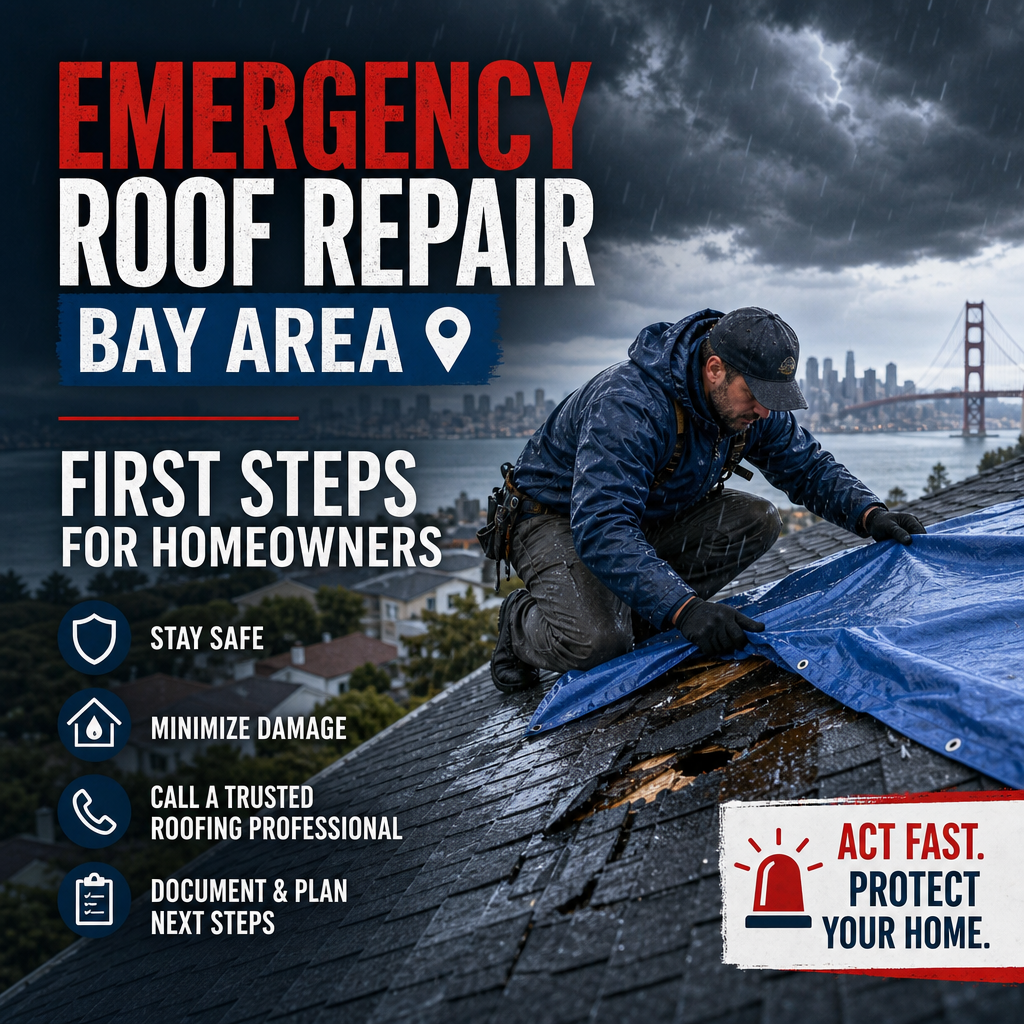
Emergency Roof Repair Bay Area: First Steps for Homeowners
Emergency Roof Repair in the Bay Area: What Homeowners Should Do First
A sudden roof leak, missing shingles, or storm damage can turn a normal day into a stressful one fast. In the Bay Area, where weather can shift quickly and older homes are common, knowing how to respond right away can help limit damage and protect your home. If you are dealing with emergency roof repair in the Bay Area, the first few steps matter most.
The goal is simple: stay safe, reduce water damage, and get professional help as soon as possible.
Step 1: Stay Safe Before You Do Anything Else
If water is coming through the ceiling or you notice a large section of roof damage, do not rush outside to inspect it up close. Wet roofs, loose debris, and damaged structures can be dangerous.
Watch for immediate hazards
- Sagging ceilings
- Falling debris
- Electrical outlets near water
- Large branches or tree limbs on the roof
- Strong winds or active rain
If any part of the ceiling looks like it may collapse, keep people out of that room. If water is near light fixtures, turn off power to that area if you can do so safely.
Step 2: Contain the Water Inside
Once everyone is safe, focus on limiting damage inside the house. Even a small leak can spread quickly and soak insulation, drywall, flooring, and furniture.
Quick actions to take
- Place buckets, pans, or tubs under drips
- Move furniture, rugs, and electronics away from the leak
- Use towels or mops to soak up standing water
- Poke a small hole in a bulging ceiling only if water is pooling and the area is safe to access, to relieve pressure
If you can, lay plastic sheets or tarps over furniture to protect them from splashes. The faster you contain the water, the less costly the repairs may become.
Step 3: Inspect the Damage from the Ground
After the leak is under control, do a basic visual check from a safe distance. You do not need to climb onto the roof. In fact, you should avoid doing that during an emergency unless you are trained and it is completely safe.
Look for signs such as:
- Missing or curled shingles
- Broken tiles
- Visible holes
- Branches or debris on the roof
- Damaged flashing around vents, chimneys, or skylights
- Gutters that are overflowing or detached
Take photos or video of what you see. This documentation can be useful for your insurance claim and for the roofing contractor when they assess the problem.
Step 4: Call a Local Roofing Professional Right Away
For emergency roof repair in the Bay Area, timing is critical. A local roofer can often provide temporary protection, such as tarping or sealing the damaged area, before making permanent repairs.
When you call, be ready to explain:
- The type of damage you see
- Where the leak is located inside the home
- When the problem started
- Whether there was recent wind, rain, or falling debris
A quick response can help stop more water from entering the home and may prevent mold, structural issues, or electrical damage.
Step 5: Protect the Roof Temporarily if It Is Safe to Do So
If conditions are calm and you can safely access the area from the ground or a low, secure point, a temporary tarp may help reduce further damage. However, this should be done carefully and only if it does not put anyone at risk.
A roofing professional can install a secure tarp more safely and effectively. In many cases, professional emergency tarping is the best short-term solution until weather improves or materials are available for a permanent fix.
Step 6: Contact Your Insurance Company
If the roof damage came from a storm, fallen tree, or sudden accident, your homeowner’s insurance may cover some or all of the repairs. The sooner you notify your insurer, the better.
Be prepared with:
- Photos of the damage
- Date and time of the event
- A written description of what happened
- Receipts for emergency repairs or temporary protection
Keep all records related to the damage and repairs. This can make the claims process smoother and help prove that you acted quickly to prevent additional loss.
Why Bay Area Homes Need Fast Roof Attention
The Bay Area has a mix of coastal moisture, seasonal rain, wind events, and older housing stock. That combination can make roof problems show up quickly and worsen just as fast. A minor leak today can become a major repair if it is ignored.
Homes in neighborhoods with mature trees may also face added risks from falling branches, clogged gutters, and debris after storms. Fast action is especially important in these situations because water intrusion can affect more than just the roof.
Common Mistakes to Avoid
During a roof emergency, it is easy to panic and make the problem worse. Try to avoid these common mistakes:
- Climbing onto a wet or damaged roof
- Ignoring small leaks that seem manageable
- Waiting too long to call a roofer
- Using unsafe patch materials
- Forgetting to document the damage
Temporary fixes are helpful, but they should not replace a proper repair plan.
Final Thoughts
When a roofing problem happens suddenly, the best approach is to stay calm and act in order: protect people, control water inside, document the damage, and call for help. If you need emergency roof repair in the Bay Area, quick action can save money, reduce stress, and help keep your home safe.
A fast response today can prevent much bigger problems tomorrow.