
Why Bay Area Roofs Fail Early: Microclimates, Salt Air, Seasonal Stress
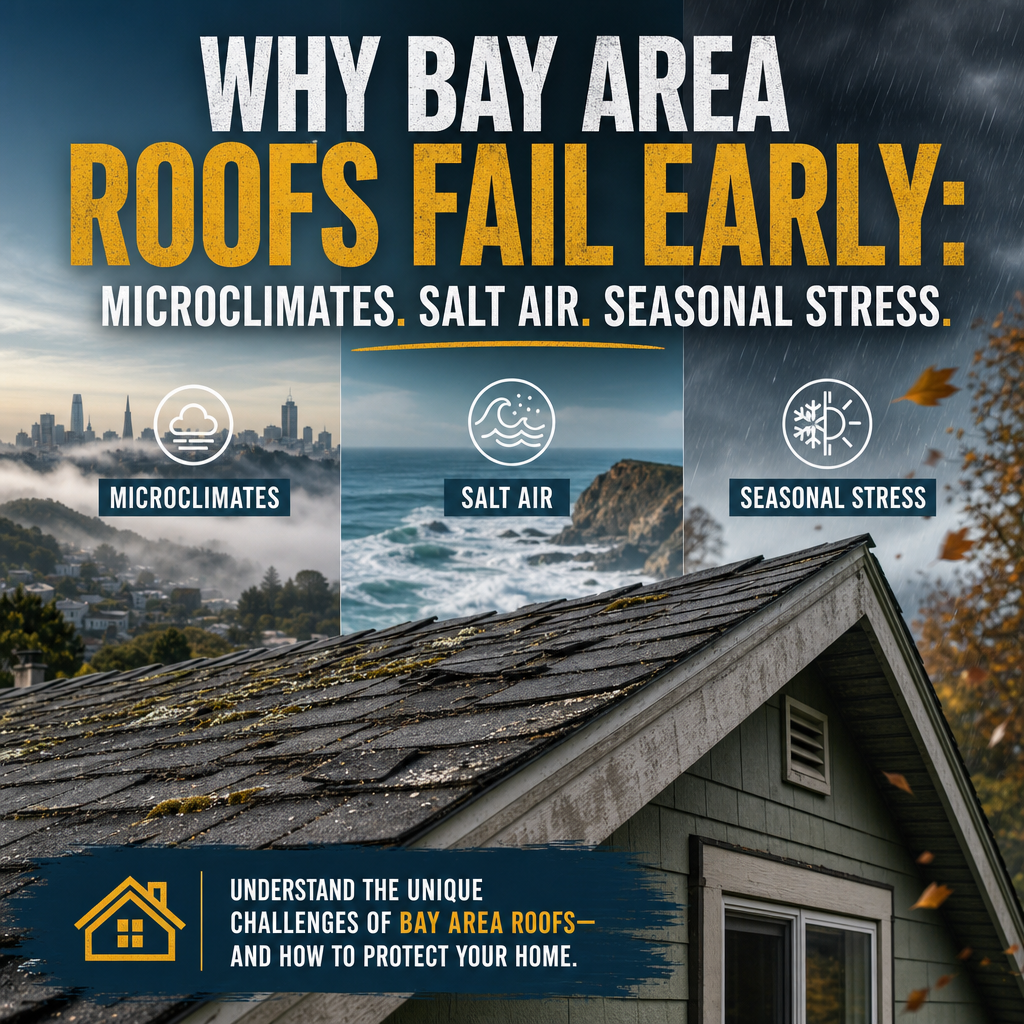
Why Bay Area Roofs Fail Early: Microclimates, Salt Air, and Seasonal Stress
Bay Area homeowners often expect their roofs to last for decades, but many systems wear out sooner than expected. The Bay Area roofs problem is not just about age or poor materials. Local weather patterns create a tough environment that can shorten a roof’s lifespan in surprising ways.
From foggy mornings to hot inland afternoons, the Bay Area puts roofing materials under constant pressure. Add in coastal salt air, seasonal storms, and daily temperature swings, and even a well-built roof can begin to fail early.
The Bay Area’s Microclimates Create Constant Change
One of the biggest reasons Bay Area roofs struggle is the region’s many microclimates. A home in San Francisco faces very different conditions than one in Walnut Creek, San Jose, or Marin.
These differences matter because roofing materials react to weather changes over time.
Common microclimate stress factors
- Fog and moisture in coastal areas can keep roofs damp for long periods
- Hot sun inland can dry out shingles and cause cracking
- Wind exposure can lift shingles and loosen flashing
- Rapid temperature changes lead to expansion and contraction
- Shaded neighborhoods can hold moisture longer, encouraging moss and algae growth
A roof that performs well in one part of the Bay Area may fail much faster in another. That means local conditions should always guide material choice and maintenance planning.
Salt Air Can Quietly Damage Roofing Materials
Homes closer to the Pacific Ocean face another major issue: salt air. It may not seem as aggressive as rain or wind, but over time, salt can be highly damaging.
Salt particles carried in the air settle on metal fixtures, flashing, fasteners, and even roofing surfaces. When moisture mixes with salt, corrosion speeds up.
What salt air can do
- Corrode metal flashing and vents
- Weaken fasteners and seals
- Shorten the life of metal roofing components
- Increase the chance of leaks around roof penetrations
This is especially important for homes in coastal neighborhoods. Even if the roof surface itself looks fine, hidden metal parts may be deteriorating beneath the surface.
Seasonal Stress Adds Up Fast
The Bay Area does not face the same harsh winters as some other regions, but seasonal shifts still take a toll. Roofs are constantly cycling through wet and dry periods, and that repeated stress causes wear.
Winter rain exposes weak points
When rainy season arrives, small roof problems quickly become bigger ones. Cracked shingles, worn sealant, and clogged gutters can let water reach the underlayment and decking. Once water gets in, damage may spread long before a leak becomes visible indoors.
Summer heat dries and weakens materials
In warmer months, UV exposure and heat can dry out asphalt shingles, brittle sealants, and older roofing membranes. This makes them more likely to split or curl.
Wind storms loosen components
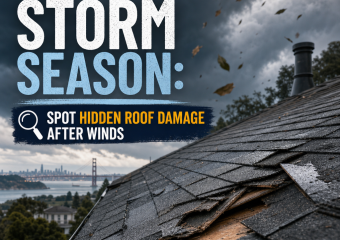
Seasonal wind events can lift shingles, shift tiles, and expose vulnerable edges. Even if the roof does not lose visible sections, repeated wind stress can break down the system over time.
Roof Failures Often Start Small
Most early roof failures do not begin with a dramatic event. They start with small, easy-to-miss issues that slowly get worse.
Common warning signs include:
- Curling, cracked, or missing shingles
- Moss or algae growth
- Rust on flashing or vents
- Water stains on ceilings or attic rafters
- Sagging areas on the roof surface
- Granules collecting in gutters
- Damaged or clogged gutters and downspouts
These signs often appear after years of microclimate exposure, salt contact, and seasonal weather cycles. Ignoring them usually leads to more expensive repairs later.
Material Choice Matters
Not every roofing system is equally suited to the Bay Area. Some materials handle humidity and coastal air better than others. Others resist heat, wind, or UV exposure more effectively.
Roofing materials that may perform better
- Metal roofing with proper coatings for corrosion resistance
- Clay or concrete tile for durability in sun and heat
- High-quality composite shingles designed for wind and moisture resistance
- Synthetic underlayments that offer better water protection
The best choice depends on the home’s exact location, surrounding trees, roof pitch, and exposure to salt air or fog. A roof near the ocean may need different protection than a roof in the East Bay hills.
Regular Maintenance Helps Prevent Early Failure
Because the Bay Area puts roofs under so many different stresses, routine maintenance is essential. A roof inspection once or twice a year can catch small problems before they spread.
Smart maintenance steps
- Clean gutters and remove debris
- Check flashing around chimneys, vents, and skylights
- Inspect shingles or tiles after major storms
- Look for moss, algae, or standing moisture
- Seal minor gaps before water enters the roof system
- Schedule professional inspections for older roofs
Simple upkeep can add years to the life of a roof, especially in areas with heavy fog, wind, or salt exposure.
The Bottom Line
Bay Area roofs fail early because they are constantly tested by changing microclimates, salt air, and seasonal stress. A roof in this region needs more than standard protection. It needs the right materials, regular inspections, and timely maintenance to stay strong.
Understanding local conditions is the first step toward preventing costly roof damage. With the right care, homeowners can slow wear, reduce leaks, and extend the life of their roof in one of the most challenging weather environments in the country.