

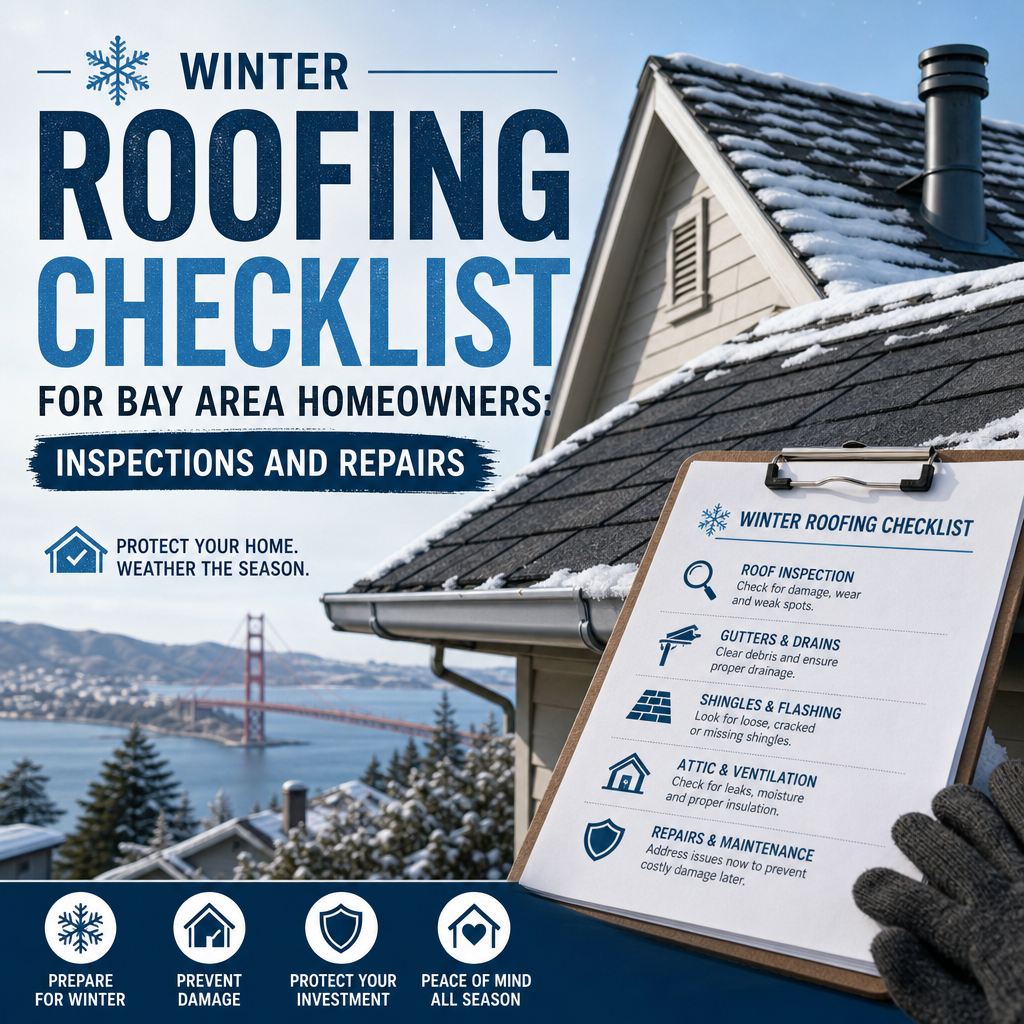
Winter Roofing Checklist for Bay Area Homeowners: Inspections and Repairs
Winter Roofing Checklist for Bay Area Homeowners: Inspections, Repairs, and Safety
Winter in the Bay Area may not bring heavy snowstorms, but it does bring steady rain, strong winds, cool nights, and the occasional severe weather system. That combination can expose roof problems fast. For homeowners, a seasonal roof check is one of the smartest ways to prevent leaks, water damage, and expensive repairs.
A solid winter roofing checklist helps you catch small issues before they become major headaches. From visible wear and tear to drainage problems and safety concerns, a little preparation goes a long way.
Why Winter Roof Maintenance Matters
Your roof is your home’s first line of defense against rain and moisture. Even a minor crack, loose shingle, or clogged gutter can allow water to seep into your attic, walls, or insulation. In the Bay Area, where winter weather can shift quickly, roof problems often show up during the first strong storm.
Regular inspection and maintenance can help you:
- Prevent leaks and interior water damage
- Extend the life of your roofing system
- Improve energy efficiency
- Reduce emergency repair costs
- Keep your home safer during storms
Start With a Visual Roof Inspection
A basic visual inspection is the first step in any winter roofing checklist. You do not need to climb onto the roof to spot many common warning signs. Use binoculars from the ground if needed, or inspect from a safe vantage point.
Look for:
- Missing, curled, or cracked shingles
- Damaged flashing around chimneys, vents, and skylights
- Sagging areas or uneven roof lines
- Moss, algae, or heavy debris buildup
- Signs of rust on metal roofing parts
- Loose gutters or downspouts
Inside the home, check ceilings and attic spaces for:
- Water stains
- Damp insulation
- Mold or mildew odors
- Daylight coming through roof boards
- Peeling paint near the ceiling
If you notice any of these issues, schedule a professional inspection as soon as possible.
Clean Gutters and Downspouts
One of the most important winter roofing tasks is keeping water moving away from your home. Leaves, twigs, and debris can block gutters and downspouts, causing overflow that backs up under shingles or pools near the foundation.
A good gutter cleaning should include:
- Removing debris by hand or with a scoop
- Flushing the gutters with water
- Checking for leaks, clogs, or loose sections
- Making sure downspouts direct water away from the house
- Confirming that gutter guards, if installed, are clear
In the Bay Area, where trees are common in many neighborhoods, clogged gutters are a frequent cause of winter roof trouble.
Check for Roof Damage and Make Repairs Early
Small roof problems rarely stay small for long. Winter moisture can make existing issues worse, especially around seams, flashing, and penetrations.
Common repairs homeowners should not delay include:
Replacing Missing or Damaged Shingles
Wind and age can loosen shingles and expose the roof deck. Replacing damaged sections helps prevent water intrusion.
Resealing Flashing
Flashing protects vulnerable areas around chimneys, skylights, vents, and valleys. If the seal is cracked or separated, water can get in quickly.
Fixing Loose Roof Components
Exposed nails, lifted edges, or damaged ridge caps should be repaired before the next storm.
Addressing Soft Spots or Rot
If a section of the roof feels soft or shows signs of rot, it may indicate deeper structural damage that needs professional attention.
Inspect the Attic for Hidden Problems
Not all roof issues are visible from the outside. The attic can reveal early signs of trouble before leaks become obvious indoors.
During your winter inspection, look for:
- Wet insulation
- Dark stains on rafters or roof decking
- Mold growth
- Poor ventilation
- Signs of pests entering through gaps
Proper attic ventilation also matters in winter roofing care. Without enough airflow, moisture can build up and lead to condensation, mildew, and roof deterioration.
Prioritize Safety During Roof Work
Roofing maintenance can be dangerous, especially during wet or windy weather. Homeowners should know when to stop and call a professional.
Follow these safety basics:
- Never inspect or repair the roof during rain or high winds
- Use a sturdy ladder and have someone spot you
- Wear shoes with good traction
- Avoid stepping on wet or slippery roofing surfaces
- Stay clear of power lines
- Do not attempt steep or high roof repairs on your own
If you are unsure about the roof’s condition or the job requires climbing, professional help is the safer choice.
When to Call a Roofing Professional
Some winter roofing issues are best handled by an experienced contractor. Call a professional if you notice:
- Active leaks
- Significant shingle loss
- Storm damage
- Structural sagging
- Repeated gutter overflow
- Mold or moisture in the attic
- Damage around chimneys, vents, or skylights
A licensed roofing professional can perform a thorough inspection, identify hidden concerns, and recommend the right repairs before winter weather gets worse.
Final Thoughts
A well-timed winter roofing checklist can help Bay Area homeowners protect their property, avoid emergency repairs, and stay ahead of seasonal weather risks. By inspecting your roof, cleaning gutters, making small repairs, checking the attic, and putting safety first, you can reduce the chance of costly damage this winter.
A little maintenance now can save a lot of stress later.