

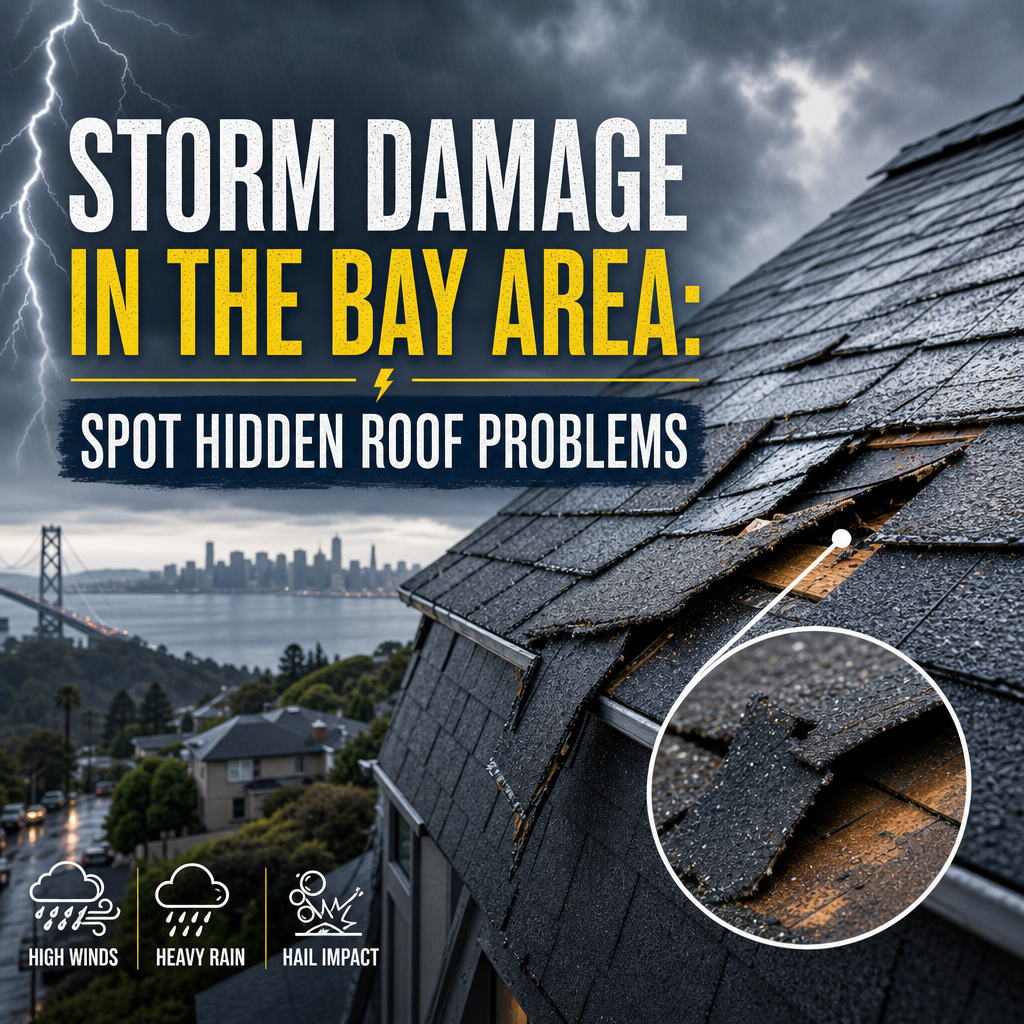
Storm Damage in the Bay Area: Spot Hidden Roof Problems
Storm Damage in the Bay Area: How to Spot Hidden Roof Problems After Heavy Winds
Heavy winds can do more to a roof than knock down a few branches or scatter shingles across the yard. In the Bay Area, where winter storms and sudden gusts can roll in quickly, storm damage in the Bay Area often shows up in subtle ways that homeowners miss at first. A roof may look fine from the street, but hidden issues can lead to leaks, mold, insulation problems, and expensive repairs later on.
Knowing what to look for after a storm can help you catch damage early and protect your home before a minor issue becomes a major one.
Why Wind Damage Is Easy to Miss
Wind does not always leave obvious signs. Sometimes it lifts shingles just enough to break the seal underneath, loosens flashing around vents, or shifts tiles slightly out of place. These problems may not be visible from the ground, but they can allow water to seep in during the next rain.
In the Bay Area, the combination of wind, rain, and salt air in some neighborhoods can make roof materials wear down faster. Even if your roof is relatively new, repeated storms can weaken vulnerable areas over time.
Signs of Hidden Roof Problems
After a heavy wind event, take a careful look around your property and inside your home for warning signs. Some of the most common indicators of hidden roof damage include:
- Missing, cracked, or curled shingles
- Shingles or tiles that appear lifted or uneven
- Pieces of roofing material in the yard or gutters
- Bent, detached, or damaged flashing
- Granules collecting in gutters or near downspouts
- Water stains on ceilings or walls
- Damp insulation in the attic
- Musty odors that may suggest moisture buildup
Even small changes can point to a larger roofing issue. If something looks off, it is worth taking seriously.
Check the Roofline From the Ground
Use binoculars if needed and inspect the roofline carefully from outside. Look for sections that seem uneven, warped, or out of place. Pay special attention to areas around ridges, valleys, chimneys, skylights, and vents, since these spots are more likely to fail under wind stress.
You may also notice flashing that has shifted or lifted. Flashing is a thin metal material that seals joints and helps keep water out. When it is damaged, leaks can start before you see any visible water inside.
Inspect Gutters and Downspouts
Gutters can reveal a lot about storm damage in the Bay Area. If you find a buildup of shingle granules, broken bits of tile, or roofing debris, your roof may have taken a hit. Clogged or bent gutters can also prevent proper drainage, which increases the risk of water backing up under roofing materials.
Make sure downspouts are directing water away from the foundation as well. Storm damage is not only a roof issue; it can affect the entire drainage system around your home.
Don’t Forget the Attic
The attic is one of the best places to check for hidden roof problems after heavy winds. If it is safe to enter, look for:
- Daylight coming through the roof boards
- Water spots or damp wood
- Wet insulation
- Signs of mold or mildew
- Nails that appear loose or popped up
Even if you do not see active dripping, moisture marks can tell you that wind has compromised the roof’s protective layers.
Why You Should Act Quickly
A small roof issue rarely stays small. Once wind damage opens a path for water, each new storm can make the problem worse. Delaying repairs may lead to:
- Interior water damage
- Mold growth
- Rotting roof decking
- Damaged insulation
- Higher repair costs
In a region like the Bay Area, where weather can shift quickly, fast action matters. Catching a problem early can often mean a simpler, more affordable fix.
When to Call a Professional
Some roof damage is easy to spot, but hidden damage usually requires a trained eye. If you notice any signs of storm damage in the Bay Area, or if your roof is older and has been through several strong wind events, schedule a professional inspection.
A roofing professional can look for:
- Loose or missing shingles
- Hidden punctures or cracks
- Flashing failures
- Soft spots in the roof deck
- Damage that is not visible from the ground
They can also tell you whether repairs are enough or if a larger section of the roof needs attention.
A Simple Post-Storm Checklist
After the next windstorm, take a few minutes to walk through this quick checklist:
- Look for debris in the yard or on the roof.
- Inspect gutters for roofing material.
- Check ceilings and attic spaces for water stains.
- Scan the roofline for lifted or missing shingles.
- Examine flashing around vents, chimneys, and skylights.
- Schedule an inspection if anything seems unusual.
Protecting Your Home Starts With Early Detection
Heavy winds do not always cause immediate leaks, but they can set the stage for future damage. By learning how to spot hidden roof problems early, you can prevent costly repairs and keep your home protected through the rainy season.
If your home has recently experienced storm damage in the Bay Area, a careful inspection today can save you from much bigger problems tomorrow.